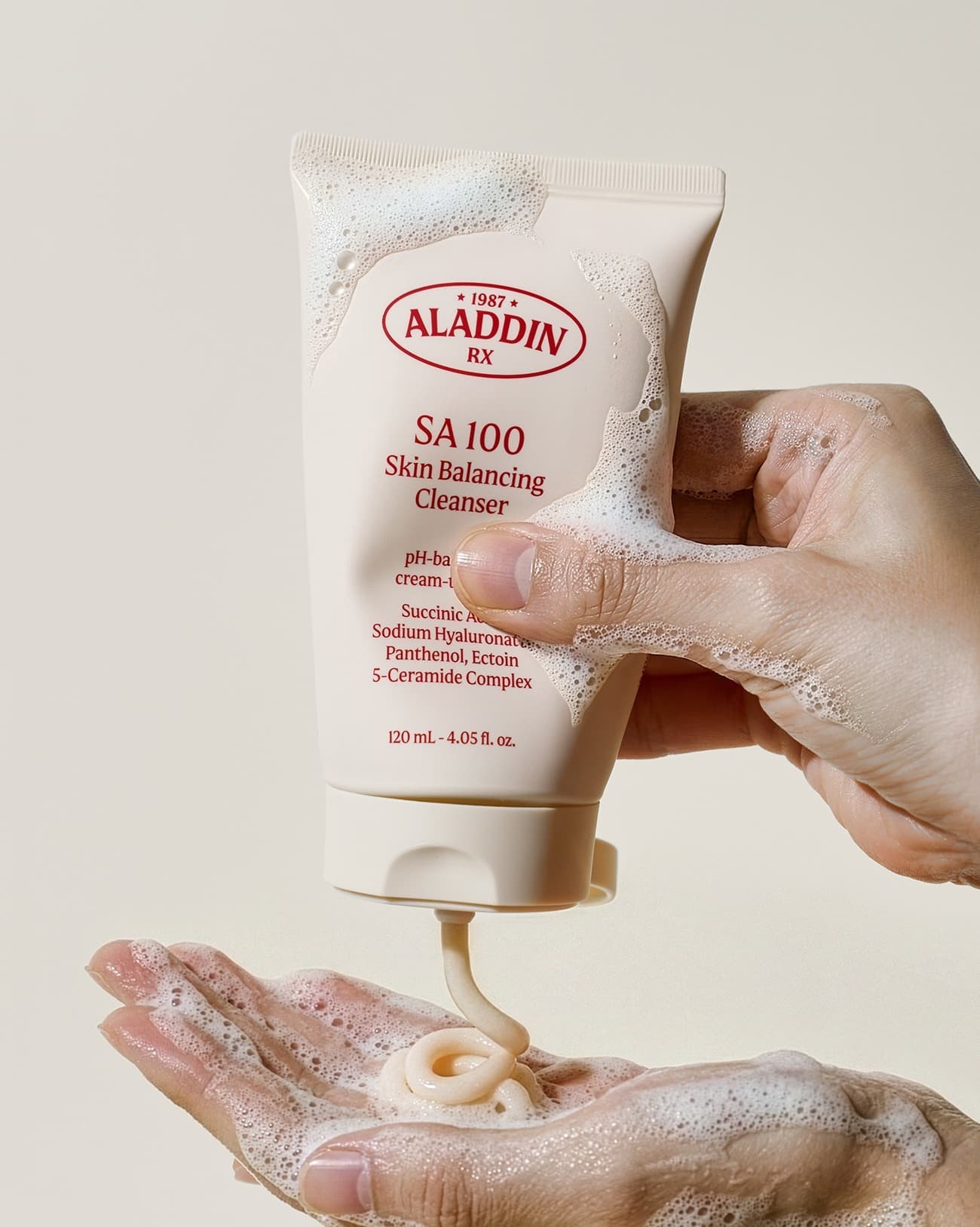
Succinic Acid: A Next-Generation Ingredient for Acne-Prone Skin
Disclaimer: This article is general educational information about cosmetic ingredients and is not medical advice. ALADDIN RX products are cosmetics, not drugs, and are not intended to diagnose, treat, cure, or prevent any disease.
Prologue: Acne, The Unending Möbius Strip
Acne is the ultimate uninvited guest of skin concerns. That unwelcome red bump greeting you in the mirror every morning is easily one of the biggest stressors of adolescence. You try products that promise the world, but the relief is only temporary. This relentless cycle of breakouts can make you feel completely trapped in a Möbius strip.
For a long time, ingredients like BHA (salicylic acid) and AHA (glycolic acid) have reigned supreme as the go-to solutions for acne. However, a new contender has recently emerged in the world of beauty science, openly challenging their throne: Succinic Acid.
The name might sound unfamiliar and overly clinical. You might even think, "Great, here we go again, another passing skincare trend." But if you take a closer look at its background, it is anything but trivial. Succinic acid is a fundamental substance deeply involved in our body's energy metabolism, and its potential has already been validated through numerous scientific studies.
This report isn't based on flashy marketing slogans from beauty brands or random internet reviews. It is an investigative guide that digs into the true nature of succinic acid, relying strictly on data from distinguished global scientific journals and reputable media outlets. Let's dive deep into how this ingredient solves skin problems—especially acne—what makes it different from existing ingredients, and how you can use it wisely.
Chapter 1: What Exactly Is Succinic Acid?
1. A Gift from a Gem: The Origin of the Name
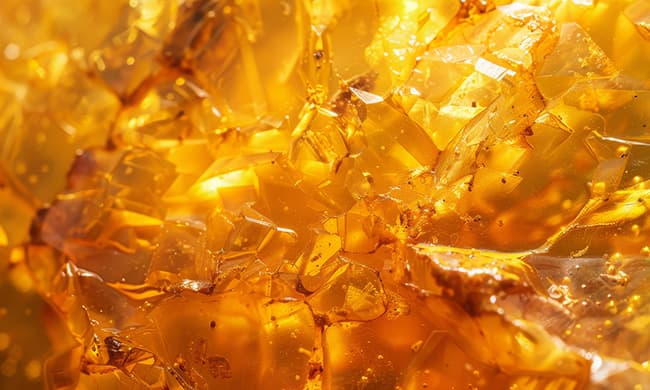
Succinic acid is also known as "amber acid." As the name suggests, it originates from amber, a beautiful gemstone formed from the hardened resin of prehistoric coniferous trees millions of years ago. The name 'Succinic' actually comes from Sucinum, the Latin word for amber. Since ancient times, amber was treated as a healing stone rather than just a piece of jewelry. Modern science suggests that the secret behind this ancient belief might just be this very ingredient: succinic acid.
Of course, the succinic acid used in cosmetics today isn't made by crushing expensive gemstones. Instead, most of it is produced through sustainable eco-friendly methods, such as fermenting plant materials like sugarcane. This approach protects the planet while allowing scientists to stably harvest high-purity succinic acid.
2. A Key Player in Our Body's 'Power Plant'
Succinic acid is not a foreign chemical or an artificial invader; your body already knows it intimately. Do you remember learning about the 'TCA cycle' (or the Krebs cycle) in your high school biology class during the cellular respiration unit? The TCA cycle is a core biochemical reaction occurring inside the mitochondria of our cells. It acts as an internal 'energy production plant' that converts the nutrients we eat into an energy currency called ATP.
Quick Note:
Succinic acid is a vital intermediate metabolite created right in the middle of this TCA cycle. In other words, it is an essential organic acid that your body absolutely needs to produce energy and sustain life.
Because it is a 'biocompatible' ingredient, it can easily interact with your skin cells to help generate energy and revitalize them with minimal irritation. It's not an outsider forcing its way in, but a helpful partner that already understands your body's internal operating system. The prestigious scientific journal Nature Reviews Molecular Cell Biology explains that TCA cycle metabolites do much more than just act as checkpoints in energy production; they also play crucial roles in cellular signaling and gene expression regulation. This opens up the exciting possibility that succinic acid can fundamentally improve skin health from within.
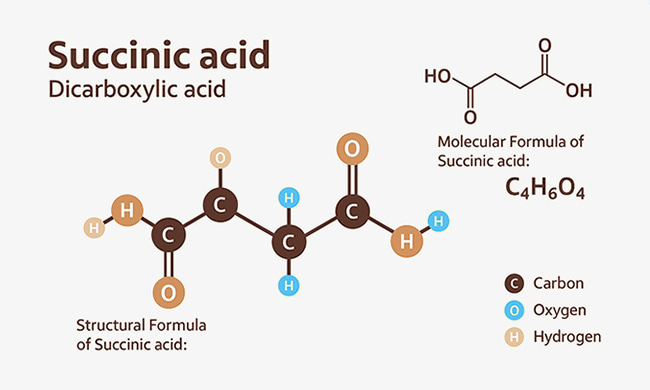
3. A Look at the Chemical Formula: C_4H_6O_4
Looking at the chemical formula of succinic acid, C_4H_6O_4, gives us a clearer picture of its characteristics. It is composed of 4 carbon (C) atoms, 6 hydrogen (H) atoms, and 4 oxygen (O) atoms.
Structurally, it is a type of 'dicarboxylic acid,' meaning it features two carboxyl groups (-COOH) at its ends. These carboxyl groups are the reason it behaves as an 'acid,' playing a vital role in balancing the skin's pH and interacting with other active ingredients. However, its relatively simple and stable molecular structure allows it to be much gentler on the skin compared to other, more aggressive acid ingredients.
Chapter 2: Magic on the Skin: The 4 Mechanisms of Succinic Acid
So, what amazing things does this smart ingredient actually do once it hits your face? Let's break down its main functions into four scientifically proven categories.
-
Supports a Balanced Environment for Acne-Prone Skin:
The main culprit behind acne is a bacterium called Cutibacterium acnes (formerly known as P. acnes). This bacterium feeds on sebum inside your pores and triggers inflammation. A 2019 study published in the renowned journal Science Translational Medicine explored how succinic acid may help support a balanced skin microbiome, including its interaction with C. acnes. What’s truly fascinating is that while it helps keep less-desirable bacteria in check, it doesn't disrupt the balance of your skin's beneficial microbial ecosystem (the skin microbiome). The beauty section of the leading British newspaper, The Guardian, quoted a dermatologist who noted, "Succinic acid offers a 'gentle approach' for acne-prone skin while being incredibly kind to the skin."
-
Gentle Sebum & Keratin Regulation for Smooth Skin:
An oily T-zone and clogged pores are a fast track to acne breakouts. Succinic acid helps regulate excessive sebum production, likely due to its structural similarity to our skin's natural oils, which allows it to subtly signal the sebaceous glands to calm down. At the same time, it provides a very mild exfoliating effect. Unlike AHAs or BHAs, it doesn't aggressively dissolve dead skin cells. Instead, it helps normalize the skin's natural turnover cycle so that unnecessary dead cells shed on their own. This prevents pores from getting blocked without the stinging, redness, and dryness often caused by traditional acids.
-
Antioxidant Power to Fight Skin Damage:
Daily stress, UV rays, and fine dust create 'free radicals'—unstable molecules that attack skin cells. This causes 'oxidative stress,' which is essentially your skin 'rusting' and aging prematurely. As a direct participant in the cellular TCA cycle, succinic acid exerts antioxidant power by boosting cellular metabolism and strengthening the skin's built-in defense systems. A review article in the journal Antioxidants explains that succinic acid plays a crucial role in modulating a cell's ability to respond to oxidative stress. It doesn't just apply a temporary antioxidant shield; it helps build your skin's fundamental strength to protect itself.
-
An Energy Boost for Dull Skin:
As mentioned, succinic acid works directly in the mitochondria—the cell's power plant. When your skin is stressed or exposed to external irritants, energy (ATP) production slows down, leading to sluggish cell regeneration and a dull complexion. Supplying succinic acid to your skin is like adding premium fuel to a tired engine. It promotes cellular respiration, helping your skin regain its natural vitality, healthy glow, and bouncy texture.
Chapter 3: The Rival Match: Succinic Acid vs. AHA vs. BHA
Where exactly does succinic acid stand when compared to AHA and BHA, the two traditional giants of the exfoliation and acne market? Comparing their features makes succinic acid's unique advantages crystal clear.
| Feature | Succinic Acid (Amber Acid) | AHA (Alpha-Hydroxy Acid) | BHA (Beta-Hydroxy Acid) |
|---|---|---|---|
| Representative Ingredients | Succinic Acid | Glycolic Acid, Lactic Acid | Salicylic Acid |
| Primary Function | Skin-balancing, Sebum control, Gentle exfoliation, Antioxidant, Cellular energizer | Surface exfoliation, Hydration | Clearing pores of deep sebum & dead skin |
| Mechanism | Helps balance acne-prone skin, Normalizes skin turnover cycle | Water-soluble. Breaks bonds between dead cells on the skin's surface | Oil-soluble. Penetrates deep into pores to dissolve oil and debris |
| Pros | Multi-functional (All-in-one), Low irritation, Perfect for sensitive skin | Immediate improvement in surface skin texture and brightness | Excellent for deep pore concerns like blackheads and whiteheads |
| Cons | Powerful exfoliating peeling effect may be weaker when used alone | Can cause stinging and redness; Increases sun sensitivity | Can cause dryness; May be highly irritating at high concentrations |
| Recommended For | Acne-prone, Oily, Combination, and highly Sensitive skin | Dry, Dull, and Rough skin | Oily, Combination skin dealing with stubborn blackheads |
💡 One-Line Summary
- AHA is a 'surface scaler' that polishes the top layer of the skin.
- BHA is a 'pore vacuum cleaner' that sucks out deep oil.
- Succinic Acid is a 'smart regulator' that comprehensively balances the entire skin environment.
A noteworthy takeaway here is the 'synergy effect.' Professional medical journals like the Journal of the American Academy of Dermatology (JAAD) frequently discuss the power of combination therapies. Succinic acid is known to have an incredible synergy when paired with BHA (salicylic acid) or sulfur. Because succinic acid helps soothe the look of skin and optimizes the overall skin environment first, it creates the perfect setup for BHA to dive in and clean out the pores even more effectively without overwhelming the skin barrier.
Chapter 4: A Smart Guide to Using Succinic Acid
Now that you understand the science, it's time to learn how to apply it to your daily routine.
1. Choosing the Right Product Type
- Spot Care Products: Designed to be applied directly onto visible blemishes. This is perfect for concentrating succinic acid on areas that need extra attention. These are often blended with salicylic acid or sulfur for maximum speed.
- Serums and Ampoules: Ideal for consistent, all-over use to manage general sebum production, smooth out rough skin texture, and reduce overall redness.
- Cleansers: Perfect for daily care. Including succinic acid in a cleanser allows for a very mild daily exfoliation that helps prevent acne from forming in the first place without stripping the skin.
2. A 'Patch Test' Is a Absolute Must!
No matter how gentle an ingredient claims to be, there is no guarantee it will perfectly match 100% of skin types. Whenever you introduce a new active ingredient to your face, perform a patch test. Apply a small amount to a discreet area—like behind your ear or on your inner arm—and wait 24 to 48 hours to check for any negative reactions like redness, itching, or rashes. The global health outlet Forbes Health emphasizes that dermatologists always recommend observing your skin’s reaction through a patch test before fully diving into any new skincare product, especially those containing 'acids.'
3. Ingredient Pairing Guide
- Best Mates (Use Together):
- Hyaluronic Acid: After succinic acid preps and balances the skin environment, hyaluronic acid can flood the layers with deep moisture, securing a healthy oil-water balance.
- Niacinamide: This ingredient shares similar benefits like sebum control, soothing-supportive properties, and skin barrier care. Together, they pair well for the look of clearer skin and the appearance of post-blemish marks.
- Proceed with Caution (Space Them Out):
- High-Concentration AHA, BHA, or Retinol: Layering too many potent active ingredients at once can over-stimulate your skin and compromise your barrier. If you want to use both, space them out—use succinic acid in the morning and retinol at night, or alternate them on different days to give your skin room to breathe.
Epilogue: A Word of Advice for the Smart Consumer
We have explored the cosmetic ingredient 'succinic acid' through the lens of respected scientific journals and global media outlets.
In conclusion, succinic acid is an ingredient with a remarkably solid scientific background. It is far more than just a fleeting marketing trend. From its fundamental nature as a biocompatible substance naturally active in our body's energy cycle, to its multi-functional capabilities—including supporting acne-prone skin, controlling the look of sebum, gentle exfoliation, and providing antioxidant benefits—it stands as a highly attractive alternative. It is especially perfect for those with sensitive skin who have been burned (sometimes literally!) by harsh acne products, or for anyone looking to streamline multiple skin concerns at once.
However, the most important thing to take away is that there is no such thing as a 'magic cure-all.' Succinic acid will only show its true value when you choose and use it wisely according to your specific skin type.
The real goal of this report isn't just to memorize facts about succinic acid, but to develop an 'inquisitive attitude'—the habit of questioning the scientific principles behind ingredients and critically evaluating skincare claims. The first step toward truly scientific, effective skincare is building a personal routine based on reliable data and a deep understanding of your own skin, rather than blindly following internet trends.
You now have a powerful new tool in your beauty arsenal. Use this knowledge to finally break free from the frustrating Möbius strip of skin troubles and reclaim your healthy skin confidence!
[References]
- On Antimicrobial Effects: Wang, Y., et al. (2019). "Succinic acid produced by Cutibacterium acnes provides a key link between skin microbiome dysbiosis and acne." Science Translational Medicine, 11(496).
- On TCA Cycle & Cellular Signaling: Martínez-Reyes, I., & Chandel, N. S. (2020). "Mitochondrial TCA cycle metabolites control physiology and disease." Nature Reviews Molecular Cell Biology, 21(2), 87-101.
- On Antioxidant Properties: Tretter, L., et al. (2021). "The Mechanistic Role of Succinate in Mitochondrial ROS Production." Antioxidants, 10(9), 1429.
- On Ingredient Synergy Principles: Zaenglein, A. L., et al. (2016). "Guidelines of care for the management of acne vulgaris." Journal of the American Academy of Dermatology, 74(5), 945-973.e33.
- On Expert Commentary: Fetto, F. (2021, October 3). "The new beauty ingredients you need to know." The Observer Magazine (The Guardian).
- On Patch Testing: Nall, R. (2023, May 25). "How To Get Rid Of Acne: According To Dermatologists." Forbes Health.